
Cuimhneamh an Chláir is currently uploading its entire archive to the Digital Repository of Ireland (DRI) a 2-year project supported by the Michael Guinee Charitable Foundation. As part of this process, we have a cohort of volunteers around the globe who listen to the oral history recordings and write abstracts (summaries) of them. Carolann Madden is one such person. Currently working for the University of Galway on their Imirce Archive, Carolann writes here for Explore Your Archives Week on the #EYAGlobal/#EYADomhanda theme day of her experience with the voices of the Cuimhneamh an Chláir Archive.
Carolann Madden
I began volunteering as an abstractor for Cuimhneamh an Chláir partly because I wanted to support an organisation I love, and also because I just wanted to spend more time with their recordings. Now I look forward to sitting down with my tea and listening to conversations about a world we’re fast losing from people who know it intimately, while also helping to preserve these invaluable recordings with the DRI.
In my day job, I work at the University of Galway creating and enhancing archival metadata for thousands of letters written back and forth between Irish emigrants to North America. These letters, part of a collection called Imirce, stretch back to the 1700s and document many of the most harrowing aspects of Irish history. But they also document some of the most tender, like the love between families and friends, the deep yearning for home, the need to leave it, the opportunities found elsewhere, the loss of beloved friends and family while away, and the myriad complex feelings and motivations that make any of us leave a land we love for a life elsewhere.
There are many moments where I’m reading a letter about emigrating and I want so desperately to hear the voice of the person writing it. And then I was given Kitty Leyden’s interview to abstract.
Kitty Leyden: a storyteller from Clonina, West Clare
Kitty is an exquisite storyteller. She’s funny, evocative, whip-smart and joyful, immensely practical and meaningfully self and socially aware. And perhaps given the amount of time I spend with emigrant letters, another thing that stands out to me is how Kitty’s story echoes so many Irish immigration stories.
Born in Clonina, Cree, West Clare in 1936, Kitty grew up in a thatched house that had ‘a lovely big kitchen with a big fire and a press bed in the kitchen’ she tells us. Her father saw her mother at the Clonina crossroads and went straight to her father to make the match. ‘All marriages were arranged in the old days’ she says, ‘and if you had land, it meant a lot. But if you lived in a small little house, you got nothing, everyone took off to some country.’ She goes on to say that the dowry her mother brought to the marriage was used to pay the fares for her sisters-in-law to go to America.
A brown suitcase for New York
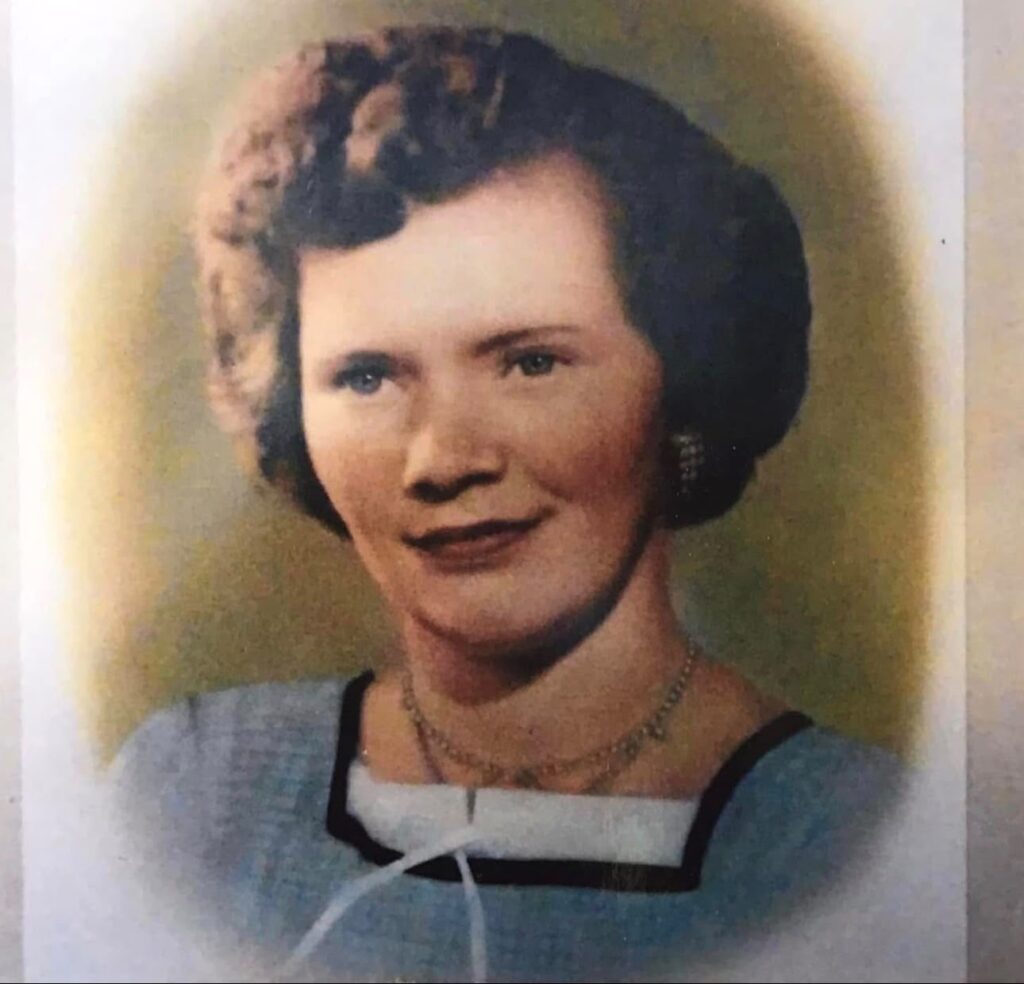
So, while Kitty’s story is local and deeply rooted in place, through the lens of immigration we can also see it as global in the ways many of our stories are in Ireland. Indeed, at the age of 17, Kitty herself left Clare and went to New York. The youngest of 11, by the time she left Ireland, 9 of those 11 children had already emigrated.
In talking about the moment her mother told her her sister was paying for her passage to New York, Kitty jokes, ‘The oldest son always got the farm, you know that, and the rest of us got a brown suitcase for New York or joined the convent.’ There’s a chuckle to be had when she says this in her characteristically comedic but matter-of-fact way, but it also represents a poignant truth of what life can be like in a place where it’s a struggle to buy a home and make a living: you go abroad.
Ice cream sodas and dancehalls in New York
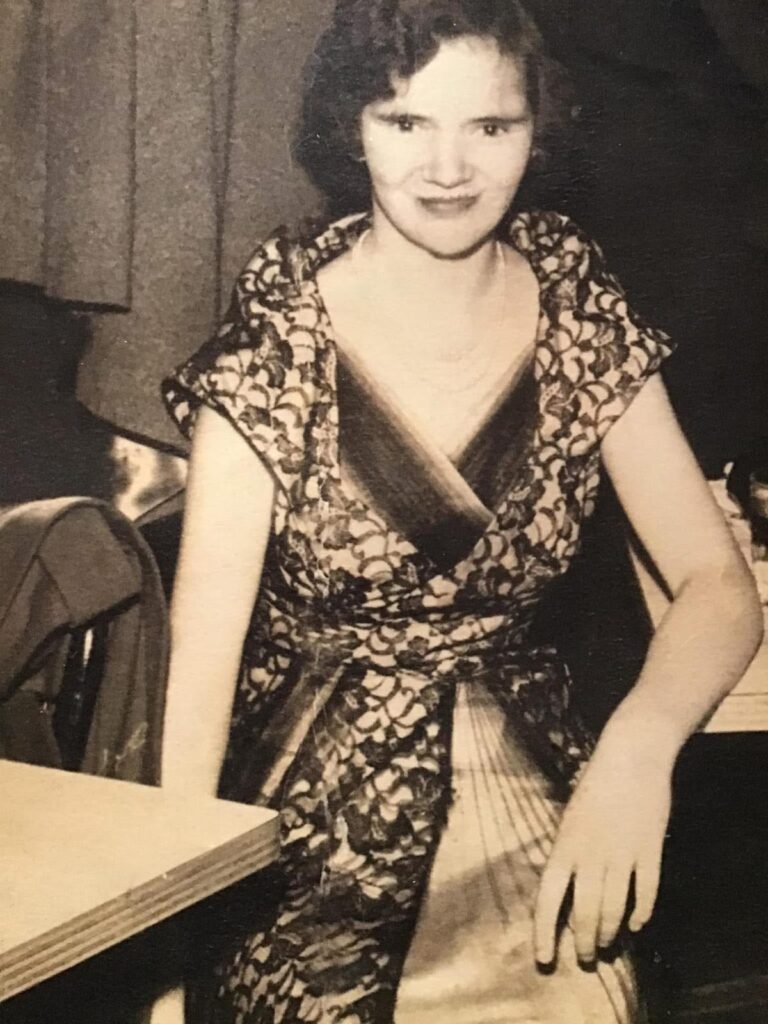
While in New York, Kitty worked making ice cream sodas, having never experienced ice cream quite like it, she also worked in a fur coat factory and got a fur coat of her own, and she worked as a model for a lady on 5th Avenue. She’d get her nails and her toes painted, her hair done, and she remembers that right when she landed, her sisters got rid of the clothes she’d worn over, took her straight downtown and ‘dressed me up beautiful.’ Her entire social circle broadened and she went to dances in big dancehalls with ‘modern music’ and big bands. She says she took to the lights of Times Square and the people of America right away. The fondness and excitement she still feels for those years is palpable when she talks.
Letters from home
She also reminisces about a fundamental early immigrant experience, and one that is repeated over and over throughout the letters in Imirce, that of receiving the letters themselves. People often discuss the experience of everyone gathering to read a long-awaited letter, sometimes even passing it around the community. And Kitty does the very same. ‘If I got a letter, the whole lot of them read it,’ she says, ‘and if we went to a dance people would say to me, “Kitty, do you have any letter from home?” And I said, “I did, do you want to read it?” So, they would all read it.’ And by ‘they all’ Kitty clarifies that she means not just her family, but also her friends.
Letters to and from home were hugely important for Irish emigrants and their families, as the sheer volume of them in Imirce (some 9,000 and counting) demonstrates. They were a connection with home, but also to a world beyond. Irish emigrants reported news from around the globe from the cost of butter and bacon, to daring styles of dresses and hats, to news of wars and the Panic of 1837. They serve as a reminder of how outwardly connected Ireland was even then, how tethered to far-flung places through the ties of emigrants and their loved ones.
Nine years in New York
Kitty stayed in New York for nine years. And while her community of West Clare family and fellow immigrants was strong in New York, she was also exposed to many other people and ways of living. She tried different jobs, learned about new music, clothes and dances, she witnessed new opportunities for women and met people far outside her immediate circle. She indeed recalls meeting many Polish immigrants who had fled WWII and how she didn’t know much about it, having been so young during the war. But she came to understand the terrible things they’d endured through knowing and talking to them and is reminded, ‘I felt so sorry for them and for their lives.’
Home to Clare, with a fur coat
Eventually, Kitty would move back and settle in Clare. But first, on a short trip to England, she wound up getting a job making Wellingtons and stayed, but not for long. She got sick while she was there; ‘No wonder I would,’ she says, ‘I was out every night dancing!’
So, she moved home a final time in the 1960s to recuperate and help her mother, and it was then that she met Pat Leyden. They fell in love and married and raised 8 children in Tulla. In telling the story of how they met, and with a nod to her time in New York, she jokes, ‘he thought I had money because I had a fur coat!’
Ultimately, Kitty had left West Clare as a girl and returned as a woman, bringing nearly a decade of experiences and exposure home with her. Kitty’s story reminds us that someone from a small town or village venturing abroad and coming home with new clothes and new ideas is woven into the fabric of Irish culture, that the diasporic connections of this island criss-cross the globe, and sometimes they loop back home. Sometimes even wearing a fur coat with a new love for ice cream.
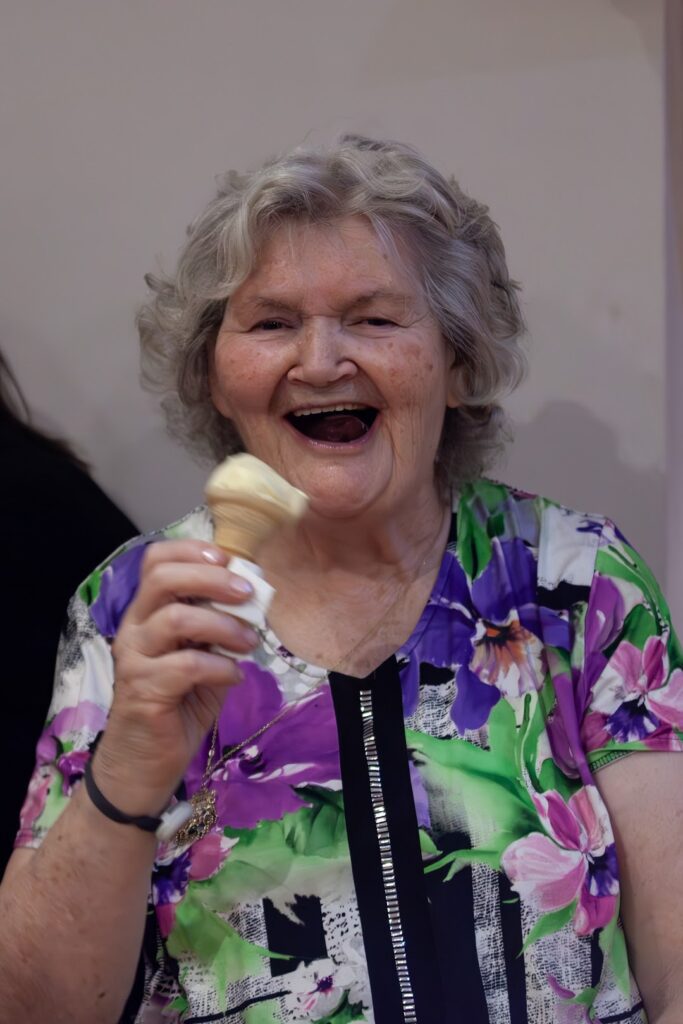
Kitty Leyden’s full interview will be uploaded to the Digital Repository of Ireland on 10 December 2026 and will be available to listen to here. Meanwhile find her on two episodes of The Clare Oral History Podcast.